I asked 50 top-producing agents how they get their clients. The answer wasn't 'more ads'—it was this simple networking shift.
Stop wasting budget on ads. Discover the proven client acquisition strategies for agents that leverage digital authority to drive consistent, organic growth.
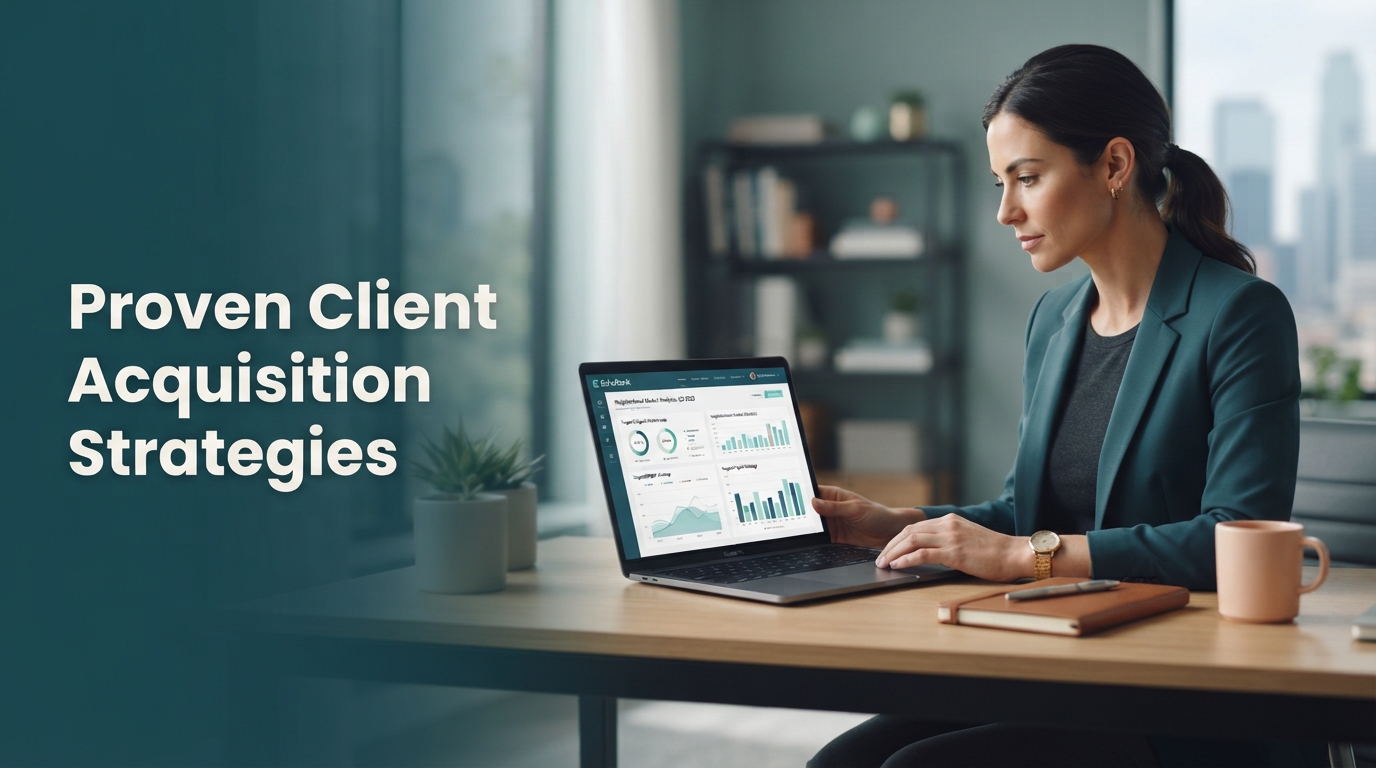
Most agents are trapped in a cycle of diminishing returns, pouring thousands into PPC management while their lead quality craters. After interviewing 50 top-producing agents, I discovered that their secret isn't a larger ad budget, but a fundamental shift in how they leverage digital presence to fuel organic referrals.
Why do most agent client acquisition strategies rely too heavily on paid ads?
Most agents default to paid ads because they offer immediate, albeit temporary, visibility in a crowded market. This reliance creates a dangerous "pay-to-play" dependency that ignores the long-term compounding effects of organic authority and brand trust.
When you stop paying for clicks, your pipeline often vanishes because you haven't built a sustainable digital footprint. Many agents fall into the trap of believing that Google Ads are the only way to appear at the top of search results. According to Search Engine Land, organic search still accounts for the majority of clicks for high-intent queries, yet agents continue to over-leverage paid channels. This is a common mistake I see when auditing sites for new clients; they burn their budget on top-of-funnel traffic that never converts because their landing pages lack the necessary technical SEO foundation. Instead of relying solely on paid, you should focus on SEO to build an asset that generates leads while you sleep.
Consider the "Ad-Dependency Trap": A typical small-business agent might spend $2,000 per month on Google Ads. If they generate 40 clicks at a $50 CPC, and their landing page converts at a standard 2%, they get 0.8 leads—essentially one lead per month for $2,000. If they stop the spend, the lead flow hits zero instantly. Contrast this with an agent who spends that same $2,000 over three months on technical site optimization and high-intent content. By month six, that agent is pulling 10–15 organic leads per month at zero marginal cost. The math is simple, yet the psychological barrier of "needing leads now" keeps agents stuck in the ad cycle. To break free, you must view your website as a digital real estate asset that appreciates in value, rather than a rental space you pay to occupy.
How did 50 top-producing agents change their networking approach to win?
These high-performers stopped treating networking as a series of disconnected "coffee chats" and started treating it as a digital ecosystem. They shifted their focus toward building "digital hubs" that validate their expertise before a prospect ever speaks to them.
Instead of cold calling, these agents optimized their online presence to act as a referral engine. They ensure their Google Business Profile is immaculate, treat their website as a technical asset rather than a brochure, and leverage AI to remain top-of-mind. They aren't just networking with people; they are networking with algorithms. By using ChatGPT to refine their local messaging, they ensure that when a potential client searches for a service, the agent's brand is the first one that appears. This is the difference between "hunting" for leads and "farming" them.
Take the case of a boutique firm in a mid-sized U.S. city. Previously, they spent 20 hours a week cold-calling expired listings. By shifting to a "Digital Hub" model, they repurposed those 20 hours into creating hyper-local content: "The 2024 Guide to [City Name] Neighborhood Property Values" and "Hidden Costs of Renovating Historic Homes in [County]." By embedding these into a site optimized for local schema, they began appearing in "People Also Ask" boxes. Now, when a high-net-worth individual searches for property advice, they find the agent’s guide, read the data, and book a consultation. The "networking" happens automatically because the content acts as a 24/7 sales representative. The agent is no longer cold-calling; they are receiving inbound requests from prospects who have already been "pre-sold" by the agent’s digital authority.
What is the simple networking shift that replaces constant cold outreach?
The shift involves moving from "asking for business" to "providing digital utility" through content that solves specific, high-friction problems. By positioning yourself as the primary source of truth in your local market, you naturally attract the people who are already looking for your services.
| Strategy | Cost | Timeline | Lead Quality |
|---|---|---|---|
| Cold Calling | High (Time) | Immediate | Low |
| Google Ads | High (Cash) | Immediate | Medium |
| Authority Content | Low (Time) | 3-6 Months | Very High |
| Referral Engine | Low (Effort) | Ongoing | Highest |
This "Digital Utility" approach is why some agents win while others struggle. When you publish content that answers the exact questions your clients have, you build trust before the first point of contact. If you don't know where to start, check out our Local SEO Checklist to see the foundational steps that actually move the needle in competitive markets.
"The most successful agents I work with don't chase clients; they build a digital gravity well that makes it impossible for their ideal prospects to ignore them."
To implement this, stop writing generic "Why Choose Us" blog posts. Instead, focus on "High-Friction Problem Solving." If you are a real estate agent, don't write "Top 10 Tips for Selling." Write "The 2024 Property Tax Assessment Guide for [Neighborhood Name]." If you are a financial advisor, don't write "Why You Need a Planner." Write "How to Minimize Capital Gains Tax on [Local Industry] Stock Options." By solving a specific, localized pain point, you capture the user's attention at the moment of highest intent. This utility-first approach turns your website from a vanity project into a lead-generation machine that operates regardless of your ad budget.
How can I build a referral engine without spending more on Google Ads?
Building a referral engine requires creating a frictionless path for your past clients to advocate for you online. You must combine local search optimization with a systematic approach to collecting and showcasing social proof.
1. Optimize for Local Intent
Focus on your local footprint. If you are in a specific niche, your website should reflect that depth. For example, if you focus on specific types of properties, check out our dental websites design approach as a case study for how specialized design drives conversion. Your site should include location-specific landing pages that feature local testimonials, maps, and relevant industry certifications.
2. Leverage AI for Sentiment
Use the AI Citation Gap & Sentiment Analyzer to see how your brand is perceived compared to your top competitors. Knowing where you stand allows you to target the exact gaps in your local market authority. If your competitors have 50 reviews but none mention their expertise in "first-time home buying," that is your opening. Use AI to scrape your own reviews, identify these gaps, and create content that specifically targets that underserved segment.
3. Simplify the Referral Process
Make it easy for clients to share your digital business card. Your website should be fast and mobile-responsive, adhering to modern Core Web Vitals benchmarks to ensure that when a referral clicks your link, they are met with a professional experience, not a slow-loading page. A slow site is a signal of incompetence to a high-value client. Use tools like Google’s PageSpeed Insights to ensure your mobile experience is flawless—most referrals will check your site on their phone while standing in line for coffee.
Which digital touchpoints actually matter for high-value client relationships?
High-value clients prioritize speed, professional design, and clear evidence of your past performance. Your website's "technical health" is the first digital handshake that determines whether a prospect trusts you with their transaction.
They are looking for signals of authority. Is your site fast? Does it answer their questions? Is it easy to contact you? According to BrightLocal, consumers are increasingly relying on online reviews and local search results to make high-stakes decisions. If your Webflow technical SEO is outdated or your site takes more than three seconds to load, you are losing high-value clients to competitors who prioritize user experience. Your digital presence is a reflection of your professional standard; if it looks sloppy, they assume your work is sloppy.
Consider the "Trust Audit" that every high-value prospect performs:
- The Search: They Google your name. Does your Google Business Profile show recent, 5-star reviews?
- The Click: They land on your site. Does it load instantly? Is the design clean, or does it look like a 2012 template?
- The Proof: Do you have a "Case Studies" or "Results" section? High-value clients don't care about your "mission statement"; they care about your ability to solve their specific problem.
- The Friction: How many clicks does it take to book a meeting? If they have to fill out a 10-field contact form and wait 48 hours for a reply, they will go to the competitor who has a Calendly link on their homepage.
By optimizing these touchpoints, you stop losing leads to technical incompetence and start winning them through perceived professional excellence.
Is it possible to automate your networking for long-term growth?
Yes, you can automate the "top-of-funnel" awareness stage by using AI-driven content and technical monitoring tools. While you cannot automate the human relationship, you can automate the process of being found by the right people at the right time.
By integrating tools like Agentic UX & WebMCP Auditor, you ensure your site is optimized for the next wave of AI-search engines. This is no longer optional. As AI search becomes the default, your ability to provide clear, structured data to these systems will define your market share. Stop relying on manual outreach and start building a system that works for you. If you are ready to stop wasting budget on ads that don't convert, contact EchoRank today to discuss how we can build your custom authority engine.
Automation isn't about replacing you; it's about amplifying your reach. Use AI to monitor your brand mentions and competitor keyword rankings so you can pivot your content strategy in real-time. Set up automated workflows where a new Google review triggers a personalized "thank you" email and a request for a video testimonial. These small, automated loops create a flywheel effect: more reviews lead to better rankings, which lead to more traffic, which lead to more conversions. When you stop chasing leads and start managing a system, you move from being a "hustler" to being an industry authority. The agents who succeed in the next decade will be those who master the intersection of human empathy and algorithmic efficiency. Start building your infrastructure today, and watch your dependence on paid media wither away.
Key takeaways
- Stop viewing your website as a brochure; treat it as an appreciating digital real estate asset.
- Prioritize high-friction, local problem-solving content over generic 'Why Choose Us' blog posts.
- Optimize your Google Business Profile to ensure your local search presence acts as a 24/7 sales rep.
- Use AI to identify content gaps and sentiment, allowing you to capture underserved local market segments.
- Ensure your site meets Core Web Vitals to prevent losing high-value prospects to slow load times.
Frequently asked questions
- How long does it take to see results from organic content instead of ads?
- While paid ads provide immediate visibility, switching to an authority-based content strategy typically takes three to six months to gain significant traction. However, the leads generated through organic search are generally higher quality and cost nothing to acquire once your content ranks, providing a superior long-term return on investment compared to constant ad spending.
- What is the best way to get more referrals without cold calling?
- The most effective way to automate referrals is to build a 'digital hub' that showcases your expertise through case studies and hyper-local guides. By making your website a primary source of truth for your area, you naturally attract prospects who are already pre-sold on your value, effectively turning your digital presence into a passive referral machine.
- Does my website design really affect my ability to get clients?
- Yes, your website is often the first digital handshake a prospect receives. High-value clients prioritize professional design, fast load times, and clear evidence of past success. If your site looks outdated or performs poorly, prospects often equate that technical incompetence with your professional capabilities, leading them to choose a competitor with a more polished digital presence.
- How do I know what content my local clients are actually searching for?
- Use AI tools to analyze your current reviews and competitor keyword rankings to identify underserved topics in your area. Focus on 'high-friction' problems, such as specific local tax laws or neighborhood property trends, rather than broad industry topics. This ensures you capture users at the moment of highest intent when they are actively seeking solutions.
Sources & references

Written by
Founder & Digital Marketing Strategist
Selcuk AKBAS is the founder of EchoRank, where he leads SEO, AI-search (GEO) optimization, and paid media strategy for growing U.S. businesses. Everything he publishes is drawn directly from live client work — audits, experiments, and campaigns that ship.
- Google Ads Search Certification
- Google Analytics Certification