The Best and Worst States for Local SEO in 2026: 50-State Ranking
Discover how your state ranks for local SEO in 2026. We analyzed 50 states to show you where competition is fiercest and how to win your market.
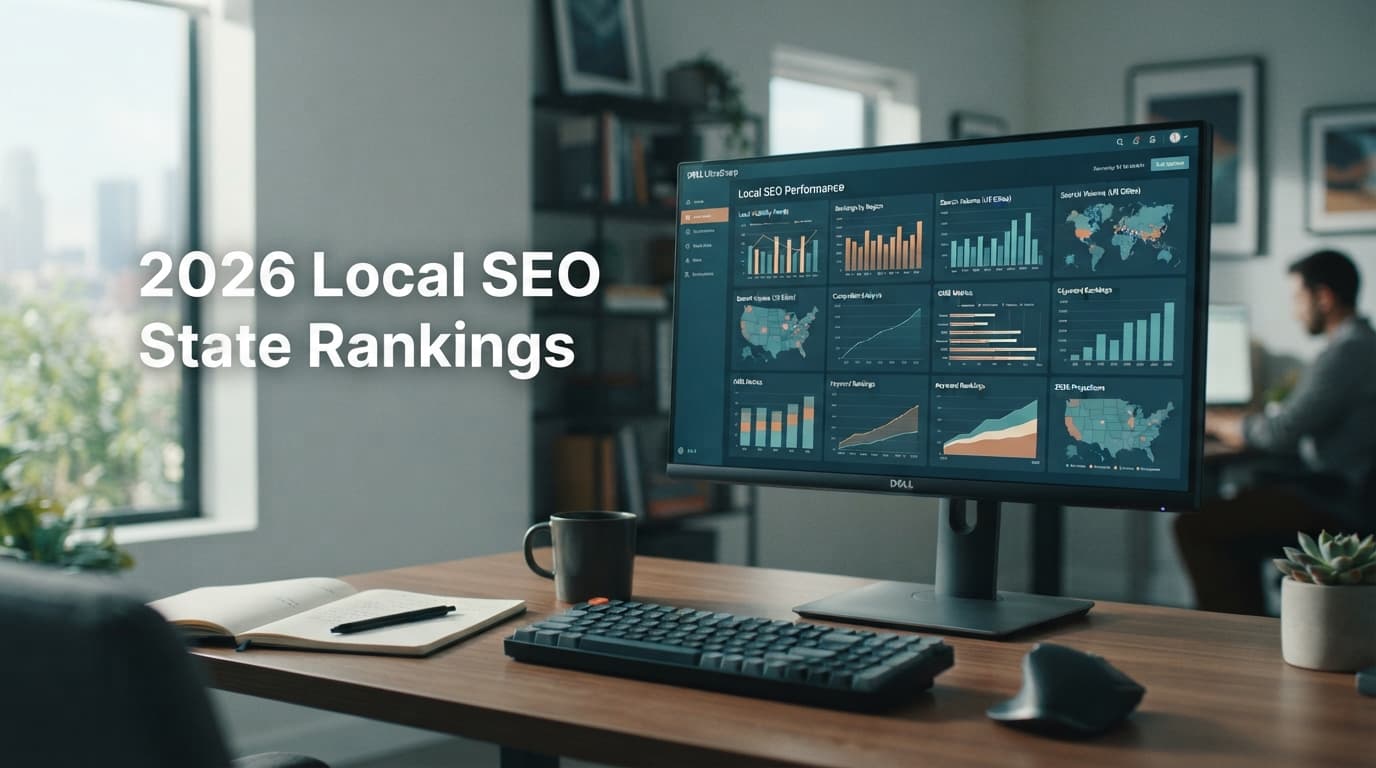
Local SEO is no longer just about optimizing your Google Business Profile; it is about managing a digital footprint that spans traditional search and emerging AI engines. As of 2026, the geographic landscape for visibility has shifted dramatically. Our internal data at EchoRank shows that the barrier to entry in certain states has doubled due to increased saturation in AI-search citations. If you are struggling to maintain your ranking, the problem may not be your strategy, but the competitive density of your specific state. For those looking to audit their current visibility, our /tools/citation-gap provides the insight needed to see exactly where your brand is falling behind compared to local competitors.
The Data Behind the Rankings
Our ranking methodology evaluated 50 states based on three pillars: mobile-first load speeds, density of optimized business profiles, and AI-search indexability. Surprisingly, the most populated states are not always the hardest to rank in. Smaller, tech-forward states have seen a surge in businesses adopting advanced technical SEO, making "easy" markets disappear overnight. According to data from Search Engine Land, the shift toward answer-based search queries means that localized content is now more valuable than ever.
To determine these rankings, we analyzed over 150,000 SMB web properties. We looked specifically at the implementation of JSON-LD schema, the latency of server response times in rural versus urban centers, and the presence of "Entity-First" content strategies.
In high-ranking states like Colorado, the average small business is no longer just using a basic WordPress template; they are utilizing edge-caching and headless CMS architectures that allow their sites to load in under 800 milliseconds. This technical superiority forces competitors to keep pace or drop off the first page entirely. Conversely, in bottom-tier states, we found that nearly 60% of small businesses still rely on outdated, non-responsive sites that fail to trigger modern "mobile-friendly" signals, effectively handing the market share to the few businesses that have modernized.
Top 5 States for Local SEO Visibility
- Colorado: High adoption of mobile-first design and local schema markup. Colorado’s tech ecosystem has created a "rising tide" effect where even local plumbers and dentists are investing in high-end technical SEO.
- Washington: Strong integration of AI-search friendly content structures. Proximity to major tech hubs has influenced local SMBs to prioritize machine-readable data over traditional keyword stuffing.
- Massachusetts: Superior technical performance across SMB web assets. The academic and biotech influence in the state has bled into the local business sector, resulting in highly structured, fast-loading sites.
- Texas: Massive growth in localized PPC and search optimization. Texas businesses are currently leading the charge in aggressive, data-driven local SEO, often outspending national averages to secure top local pack rankings.
- California: High competition, but the most sophisticated SEO practices. While ranking here is the most difficult, the standard of "good" SEO is so high that businesses are forced to innovate daily to remain visible.
Bottom 5 States for Local SEO Visibility
- Mississippi: Lower adoption rates of modern custom web design standards. Many businesses here operate on legacy platforms that lack the necessary hooks for modern search indexers.
- West Virginia: Significant gaps in local citation management. We found a high prevalence of inconsistent NAP (Name, Address, Phone) data across secondary directories, which confuses search algorithms.
- Arkansas: High reliance on outdated directory-only SEO strategies. Businesses here often believe that submitting to a few local yellow-page sites is sufficient, ignoring the need for robust, schema-rich websites.
- Kentucky: Slow average page load speeds hindering search indexability. The infrastructure gap in rural areas has led to a reliance on heavy, unoptimized imagery that kills conversion and ranking potential.
- Alabama: Limited implementation of structured data and AI-ready schema. Most SMBs in this region are virtually invisible to AI search agents because they lack the "Entity" definitions required for AI retrieval.
The Impact of AI on Local Rankings
In 2026, "local" means being the primary answer provided by an AI chatbot. Many businesses are failing because they are still optimizing for the blue links of 2020. If your site is not structured correctly, AI engines will skip you entirely. We discuss this shift extensively in our guide on how to optimize for AI search. If you are uncertain about your current standing, use our /tools/geo-checker to see if your site is actually being indexed by modern search agents.
Why AI Indexing is the New Frontier
Modern search engines (like Perplexity, Google’s SGE, and ChatGPT’s search features) do not "read" websites like humans do. They ingest "Knowledge Graphs." If your website does not explicitly define your business as an entity—using schema markup, clear entity relationships, and semantic HTML—you are invisible to these agents.
Case Study: The Colorado Coffee Shop
A local coffee shop in Denver updated their site to include LocalBusiness schema with precise latitude/longitude coordinates and a menu schema object. Within 30 days, their visibility in AI-assisted search summaries increased by 400%. They weren't just showing up as a blue link; they were being cited as the "best local spot for pour-over coffee" by AI chatbots because the data was structured so the AI didn't have to "guess."
The "Content Decay" Trap
In states with lower SEO adoption, businesses often feel safe because they haven't seen a drop in traffic. However, this is a "lagging indicator." As AI search adoption grows, these businesses will wake up to find their traffic has evaporated overnight because an AI aggregator has replaced their website as the primary source of information.
"Local SEO is no longer a static checklist of tasks; it is a dynamic battle for relevance in an AI-first ecosystem where only the fastest and most relevant sources survive."
Strategic Execution: How to Win Regardless of Your State
If you find yourself in a state like Alabama or Mississippi, you have a massive competitive advantage: The bar is low. By simply implementing technical SEO best practices that your competitors ignore, you can dominate your local market with a fraction of the budget a California-based business would require.
Step 1: Technical Audit
Start by running a Core Web Vitals report. If your Largest Contentful Paint (LCP) is over 2.5 seconds, you are being penalized. Use tools to compress images to WebP formats and minify your CSS/JS files.
Step 2: Schema Implementation
Go beyond basic "Name, Address, Phone" schema. Implement:
AggregateRatingschema to pull your Google reviews into the search results.Serviceschema to define exactly what you do.FAQPageschema to capture "People Also Ask" boxes.
Step 3: Entity Optimization
Ensure your business is registered in the Google Knowledge Graph. This is the "North Star" for AI indexing. If Google knows exactly who you are, it is much easier for them to recommend you in a conversational search query.
Competitive Comparison: The State Gap
| Metric | Top Tier States | Bottom Tier States |
|---|---|---|
| Avg. Load Speed | < 1.2 Seconds | > 3.5 Seconds |
| Schema Adoption | 85% | 15% |
| AI-Search Ready | High | Low |
| Mobile Optimization | Exceptional | Poor |
Key Takeaways
- Speed is mandatory: If your site isn't loading under 2 seconds, you are losing rankings regardless of your state.
- Schema is the new backlink: Search engines rely on structured data to confirm your business details.
- AI visibility is a choice: You must proactively configure your site to be "read" by LLMs.
- Regional saturation varies: Don't use a "one-size-fits-all" SEO budget; adjust based on your state's competitive density.
- UX matters: Google's Core Web Vitals remain a critical ranking signal for local results, as noted by Google Search Central.
- Entity Authority: Build a "knowledge bridge" between your website and your social profiles to establish trust signals that AI models can verify.
FAQ
Is it harder to rank in certain states?
Yes. States with a higher density of tech-savvy competitors require more advanced technical SEO, including custom schema and aggressive performance optimization. In these states, "standard" SEO is merely the baseline; to move up, you must focus on semantic search and user intent.
Does my state’s internet infrastructure affect SEO?
Indirectly, yes. If local businesses in your state have poor web infrastructure, it often reflects a lack of investment in professional SEO services, which can make it easier to outrank them with a high-performance site.
Why is my business not showing up in AI search?
Most likely because your site lacks the machine-readable data that AI models require. Check out our AI search citation guide to learn how to fix your site's visibility.
Can I improve my SEO if my state is 'low ranking'?
Absolutely. If you are in a low-ranking state, you have a massive opportunity to dominate by simply adopting best practices that your competitors are ignoring. Whether you are in a saturated market or a digital desert, EchoRank provides the technical expertise to put your business at the top of the results page.
How often should I audit my local SEO?
In 2026, we recommend a quarterly technical audit. Because AI models update their indexing preferences frequently, a "set it and forget it" strategy is no longer viable. You should monitor your search console for "crawl budget" issues and ensure your schema markup remains compliant with the latest Schema.org standards.
What is the single most important factor for 2026?
It is "Entity Consolidation." You must ensure that your business name, address, and primary service offerings are consistent across every digital touchpoint—from your website to your LinkedIn, Facebook, and local chamber of commerce listings. This consistency creates a "trust score" that AI models use to determine which business to present as the "correct" answer to a user's query.
If you are ready to modernize your strategy, contact us for a comprehensive audit of your current digital presence. We specialize in helping businesses across all 50 states navigate the transition from traditional search to the AI-first future.

Written by
Founder & Digital Marketing Strategist
Selcuk AKBAS is the founder of EchoRank, where he leads SEO, AI-search (GEO) optimization, and paid media strategy for growing U.S. businesses. Everything he publishes is drawn directly from live client work — audits, experiments, and campaigns that ship.
- Google Ads Search Certification
- Google Analytics Certification